ENSURING AN ADEQUATE SUPPLY OF ENERGY is rapidly shaping up
to be one of the primary societal challenges of the 21st century. Around the
world, record-setting petroleum prices and the economic strain they have caused
have grabbed news headlines and the public's attention. Everyone is looking for
a solution to the increasingly high cost of energy. That high cost has pervaded
nearly every aspect of our daily lives — the goods we buy, the food we eat, and
the transportation we use.
At
Toyota,
we believe an important cost of energy is the negative impact it can have on
the environment. Not only is petroleum a limited resource that has become
increasingly expensive, but consumed as a fuel, it emits CO2, a primary
greenhouse gas and contributor to climate change. The societal threat posed by
climate change could eventually be more disrupting than the current high price
of fuel. Therefore, a sustainable solution must include not only the pursuit of
new energy sources, but sources that are also clean and renewable. Since any
source of energy will entail costs, a sustainable solution must also include
conservation and more efficient ways to use whatever source is selected.
Toyota
strives to lead by example. As the footprint of our operations, the breadth of
our product offerings and the volume of our sales in North America have
expanded, so, too, has our effort to carefully manage the energy we consume and
the greenhouse gases we emit.
For example, since 2003
Toyota's annual vehicle sales have climbed
from 1.9 to 2.9 million units. Over that same period, we have been able to
improve the estimated fleet average fuel economy of our new cars and trucks by
9% based on Toyota's overall Corporate Average Fuel Economy (CAFE) values for
the 2003 and 2007 model years. We have added four new manufacturing plants in
North America over the past 10 years as annual production
has increased by 700,000 units. Over that same 10 year period, we have been
able to reduce the amount of energy required to produce a vehicle by 27%.
These results exemplify our pursuit of sustainable mobility.
Our actions are dictated by
Toyota's
Earth Charter and Five-Year Environmental Action Plan. The goals and targets in
our FY2011 Environmental Action Plan challenge us to innovate more efficient
ways to design, build, distribute and sell our products, and to explore using
renewable energy sources for these processes. Our Action Plan also calls for us
to assist in the research, development and commercialization of vehicles that
squeeze more mileage out of a tank of gasoline and operate on a diverse array
of energy sources such as biofuels, electricity and
hydrogen.
Technology will be a key factor in meeting the world's
energy needs in a sustainable manner. Since a single solution is unlikely, we
are pursuing a broad portfolio of technical approaches. In sum, we are
continuously searching for kaizens, small incremental steps of continuous
improvement, that lead to new ways to save energy and reduce GHG emissions.
Small savings add up. We are conducting GHG emissions inventories and energy
audits to monitor our progress. Our business partners such as suppliers and
dealers share our commitment. Finally, we are trying to educate consumers on
how they can be part of the solution.
Our targets in the areas of fuel efficiency, fuels
diversity, advanced vehicle technologies, energy and
greenhouse gases are described in this chapter.
VEHICLE FUEL EFFICIENCY
In the
U.S.
,
fuel efficiency of new cars and trucks is regulated through the CAFE standards.
Today, the CAFE standard is 27.5 miles per gallon (mpg) for cars and 22.2 mpg
for trucks. A new law passed in December 2007 will increase the CAFE standard
to at least 35 mpg by 2020 for the
U.S.
new vehicle fleet.
Transport
Canada
continues to set voluntary Corporate Average Fuel Consumption (CAFC) targets of
8.6 and 10.6 liters of fuel burned per 100 kilometers traveled for cars and
trucks, respectively. As shown in Figure E below, we will exceed CAFE standards
and CAFC targets for both passenger cars and light-duty trucks for the 2008
model year. (Target 1.1)

The CAFE and CAFC programs seek to reduce energy/oil
consumption through their respective vehicle fuel efficiency standards or
targets. Other regulatory programs on the national, state and provincial levels
aim to address climate change by reducing GHG emissions from vehicles and their
fuels.
Toyota
is committed to working with the various regulatory agencies to develop
consistent standards that improve vehicle efficiency for the benefit of energy
security and climate change. It is most efficient to design, manufacture and
sell our vehicles for the North American market as a whole. Approaches based on
multiple regulatory requirements at both the federal and state/provincial
levels will be challenging for technology and product planning, as well as the
vehicle distribution process.
The most direct, immediate measure the auto industry can
take to help meet the challenges posed by energy demand and climate change is
to offer fuel-efficient products.
Toyota
offers the most fuel-efficient products of any full line manufacturer. Both the
U.S. EPA's 2008 Fuel Economy Guide and the Natural Resources Canada Fuel
Consumption Guide list the Toyota Prius as the most fuel-efficient vehicle
available for sale in the
U.S.
and
Canada
respectively.
The government of
Canada
recognized the Toyota Yaris and Toyota Prius as recipients of the 2008 ecoENERGY for Vehicles awards as the most fuel-efficient
vehicles in their respective classes. Plus, six of our vehicles are eligible
for rebates offered by the Canadian government to promote the purchase of
fuel-efficient vehicles: Toyota Prius, Toyota Camry Hybrid, Toyota Yaris, Toyota Corolla (manual transmission only), Toyota
Highlander Hybrid and Lexus RX 400h.

We also help to meet the challenges posed by energy demand
and climate change by developing technologies that improve fuel economy.
(Target 1.2) We are revamping all of our
conventional engines and transmissions over the next two years to achieve
increased fuel economy, improved air quality and reduced CO2 output.
Toyota is considering
several technologies for continued or new introduction including direct
injection gasoline engines, forced induction systems and diesel engines.

We consider how material choices may impact fuel economy.
The use of high strength steels leads to a reduction in the number of parts
needed to build a vehicle, because the same properties can be achieved with
fewer or lighter parts. The reduced mass leads to improved fuel efficiency.
Toyota currently uses
590MPa or higher strength steel grades in all 2008 model year vehicles. In the
spirit of continuous improvement, we are also developing other material
choices.
We also consider additional methods to enhance fuel
efficiency. For example, low viscosity SAE 0W-20 multigrade gasoline engine oil enables increased fuel economy performance over
traditional, higher viscosity oils by reducing friction while maintaining the
necessary lubrication in the engine. SAE 0W-20 multigrade gasoline engine oil is now specified (for certain engines) in a number of
Toyota, Lexus and Scion
vehicles.
Recently,
Toyota began using a lower viscosity differential gear oil in the Sequoia,
Tacoma and Tundra. This
led to a 1.5% improvement in fuel economy in each model. The introduction of
lower viscosity transmission fluid in the Corolla and Matrix led to a 1%
increase in each vehicle's fuel economy. While these improvements may seem
minimal, they are representative of
Toyota's
philosophy toward continuous improvement.

VEHICLE FUELS DIVERSITY
Toyota
is investing in alternative-fuel vehicle technologies that will use a more
diversified portfolio of energy and fuel sources. We are excited by the promise
these alternative fuels offer to help meet the challenges posed by increasing
energy demand and the threat of climate change. However, that excitement is
tempered by the knowledge that continued advances are needed before these fuels
can be commercialized broadly and reach their full potential. Therefore, we are
not focusing on a single path away from conventional fuels; instead, we are
exploring many alternatives, including biofuels from
cellulose and renewably-generated hydrogen. In last year's report, we described
many of the leading alternative fuels and some of the challenges we are working
to overcome. We provide additional information on ethanol below. (Target 2.1)
Ethanol
Toyota
is actively exploring greener alternatives to petroleum. One such option is
ethanol, which currently makes up approximately 5% of the
U.S.
gasoline fuel pool. Presently,
most
U.S.
ethanol is produced from corn in a relatively simple fermentation process.
Unfortunately, studies have shown the benefits of corn ethanol are rather
modest (~20% reduction in CO2 emissions and some petroleum displacement), while
the potential side effects are more extensive than initially anticipated
(increased water use, farming runoff, higher food costs and federal subsidies).
Additionally, most experts agree that corn ethanol can only displace about 10%
of our gasoline consumption due to yield and cropland limitations.
To avoid corn's limitations, researchers for many years have
been exploring ways to convert plant cellulose, the nonedible parts of plants, into ethanol. This can be done by using enzymes and microbes
to convert the plant material into sugars that can be fermented into ethanol or
by heating the biomass and thermally converting it into biofuels. Many cellulose to ethanol conversion technologies are
being explored in the lab, and some have been demonstrated on a small scale.
But high capital costs and difficulties with process scale-up has slowed the
development and construction of commercial scale facilities.
In 2007 and 2008,
Toyota
conducted studies with a pair of leading universities to examine current
academic and national laboratory biofuels research.
This work will help Toyota better understand the status of biofuel research and select particular fields that have the greatest potential to make biofuels, particularly ethanol, a success.
ADVANCED VEHICLE TECHNOLOGIES
We believe hydrogen fuel cells have the potential to provide
practical, reliable and affordable zero-emission propulsion, but we recognize
that true commercialization of hydrogen-based transportation is still years
away.
Toyota is
working with industry and government to solve the challenges surrounding
full-scale commercialization of this technology. (Target 2.2) Some of the programs we are involved with
include the U.S. Department of Energy's demonstration program for hydrogen
vehicles and infrastructure, the Society of Automotive Engineers' working
groups to develop codes and standards for hydrogen infrastructure, and
demonstration and evaluation programs with the University of California,
Irvine's National Fuel Cell Research Center and Davis' Institute of Transportation
Studies.
Toyota
is investing in a variety of advanced vehicle technologies so that our future
products will be ready to operate on the most promising of alternative fuels as
they become available. On the next page, we describe our hybrid vehicles and
how we promote wider market acceptance of this technology; plug-in hybrid
vehicles and what we are doing to address challenges involving the battery; and
fuel-cell hybrid vehicles and the accomplishments made in the past year.
Hybrid Vehicles
Toyota
sees hybrid technology as a key component for improving the efficiency and
minimizing the environmental impact of gasoline-powered vehicles, as well as an
essential and enabling element of future powertrains.
Toyota and
Lexus combined have six full hybrid vehicles on the market. We will unveil two
new dedicated hybrids at the 2009 North American International Auto Show in
Detroit.
Worldwide, our goal is to sell one million hybrids a year by
mid-next decade and offer a hybrid version of all our vehicles by the early
2020s.
Toyota
globally has sold more than one million Prius worldwide since it was first
introduced. We estimate that the Prius vehicles in operation have helped avoid
some 4.5 million tons of CO2 emissions.
Toyota
runs a number of campaigns and sponsors events aimed at building awareness and
understanding of our hybrid technology. These events promote the development of
clean-energy vehicles and help ensure wider market acceptance. (Target
3.1) Some of the events from the past
year include:
• Lexus Hybrid Drive, Lexus Owner Events and Taste of Lexus
Events have been conducted across the
U.S.
These events increased
awareness of the
Lexus Hybrid
Drive and highlighted ways to decrease our
environmental footprint. Lexus has also created a new Web site to explore ways
that consumers can minimize their impact on the environment without sacrificing
comfort and luxury. Please visit www.lexus.com/hybridliving for more information.
• Toyota Hybrid Ride and Drive events were conducted across
the
U.S.
and in 13 cities in
Canada
.
These events provided information about
Toyota's
hybrid vehicles and offered the chance to test drive one of the six
Toyota and Lexus hybrids
currently on the market.
•
Toyota was a contributing
sponsor of The Green Living Show,
Toronto's
first consumer show dedicated to all things green. Visitors were able to test
drive hybrid vehicles. We also sponsored the EPIC (Ethical Progressive
Intelligent Consumer) Sustainable Living Expo in
Vancouver in March 2008.
•
Toyota dealers held over 80
hybrid seminars in communities and schools to build awareness of climate change
and increase understanding of
Toyota
hybrid vehicles.
For more information on
Toyota hybrids, please visit
www.toyota.com/highway and
www.hybridsynergydrive.ca.
For more information on Lexus hybrids, please visit
www.lexus.com/hybriddrive and
www.lexushybriddrive.ca.
Plug-In Hybrid Vehicles
As the global leader in hybrid vehicles, it is vital that
Toyota explore
evolutionary pathways for our hybrid drive technology. A pathway that shows
promise to reduce fuel consumption and emissions (including CO2) from hybrids
is the plug-in hybrid vehicle (PHV). In 2007,
Toyota
became the first auto manufacturer to begin testing a modest fleet of PHV
prototypes on public roads in the
U.S.
,
Japan
and
Europe.
Two PHV prototypes were delivered to the
University of
California,
Berkeley and the
University
of
California,
Irvine
as part of
Toyota's
sustainable mobility development program with the two campuses. This multiyear
project, partially funded by the California Energy Commission and Air Resources
Board, evaluates consumer use and acceptance, infrastructure issues and
environmental benefits of three advanced vehicle technologies — hybrid, fuel
cell and PHV.
Toyota's president announced
at the 2008 North American International Auto Show that
Toyota
would accelerate our global plug-in hybrid research and development program and
deliver hundreds of PHVs powered by lithium-ion
(Li-Ion) batteries to a wide variety of global commercial customers in 2010,
with many coming to the
U.S.

Toyota's
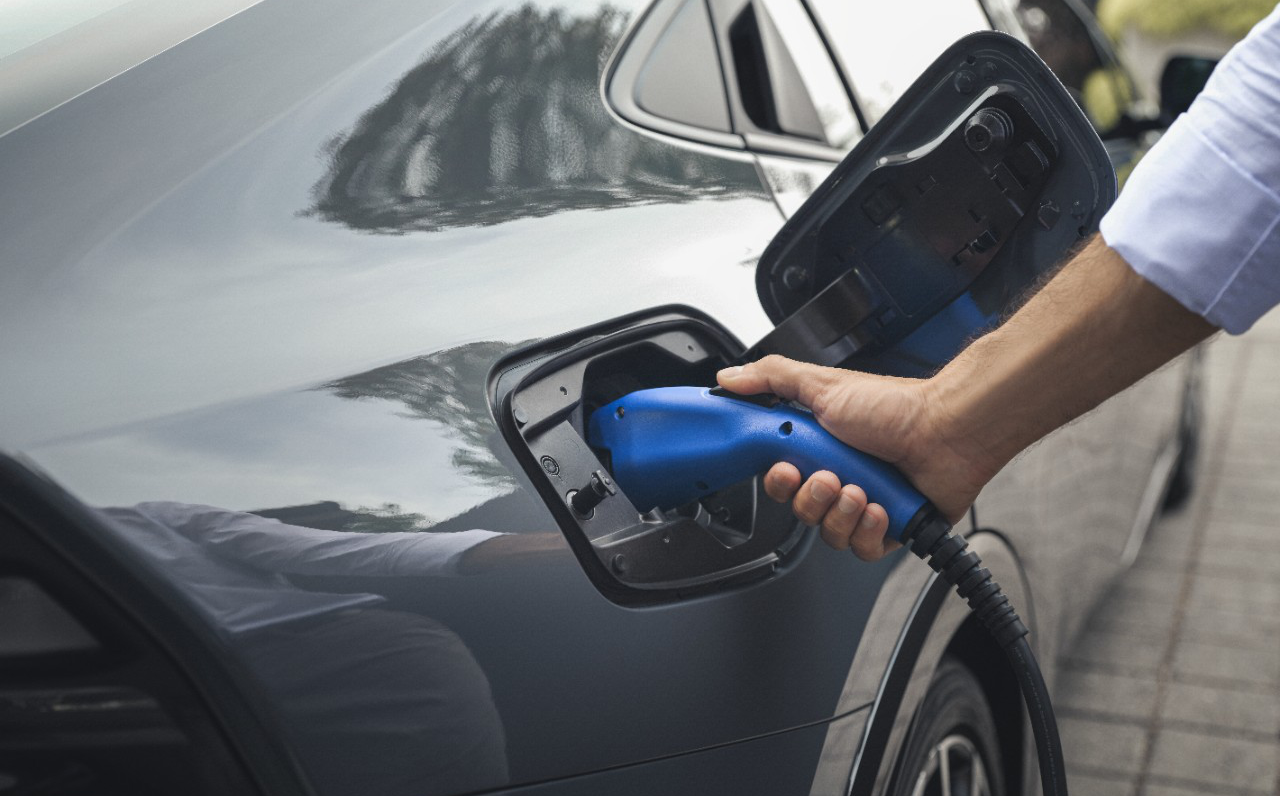
PHV offers all the advantages and utility of a conventional hybrid vehicle,
plus has the potential to recharge the on-board battery pack from home or any
location with an electrical outlet. Depending on the driving profile, regular
recharging can significantly reduce gasoline consumption and potentially reduce
both mobile source GHGs and criteria pollutants. To
reach the potential for reduced emissions, clean electricity sources will be
required. Additionally, PHVs offer fuel diversity, as
the vehicle can use gasoline or electricity (which itself comes from a variety
of sources).
Our prototype is based on the current Prius and designed to
demonstrate the flexibility of our Hybrid Synergy Drive (HSD). With software
modifications and a second nickel-metal hydride (NiMH)
battery pack, it can accelerate briskly and is capable of reaching 60 miles per
hour on electric propulsion alone. If higher speeds are needed or the battery
is depleted, the engine starts and the vehicle operates like a conventional
Prius. This intelligent “blending” of the gas and electric power by the HSD
system benefits the user and environment, while not requiring costly
development of new vehicle powertrains or platforms
that could limit mass marketability of the technology.

Li-Ion
Battery Progress
As with all electric vehicles, the primary technical
challenge for PHVs is the battery. Great strides have
been made in increasing battery power and energy density, but life-of-vehicle
durability and cost continue to be major challenges for PHV batteries.
Early in 2008,
Toyota
announced plans to manufacture Li-Ion batteries for automotive applications at
our joint venture battery facility with Panasonic. These batteries will be used
in our next generation PHV, scheduled to begin commercial fleet operation in
2010.
Though we chose NiMH batteries for
our first generation PHV prototypes,
Toyota
believes the chemistry will not have adequate energy density or life for
production PHVs. NiMH batteries perform well under the duty cycle of our current hybrid products
because they excel at supplying electricity in short powerful bursts, similar
to a sprinter running a 100 meter dash. However, a PHV adds deep discharge,
like running a marathon, on top of our traditional hybrid vehicle duty cycle.
For our prototype PHV, we added a second NiMH battery
to accommodate the increased battery-only operation.
Li-Ion technology is a leading contender for the PHV
application. It has good power and energy density and the potential for lower
cost compared to NiMH, but improvements must be
demonstrated before commercial introduction. These improvements include high
and low temperature operation, durability, cycle life (a measure of the
battery's tolerance to repeated deep discharge and charge cycles) and safety
under all possible operating conditions. Of these, assuming safety is first and
foremost, cycle life will be the most challenging. Consumers have come to
expect their HV battery will last the life of the vehicle and are likely
unwilling to accept anything less from a PHV.
Fuel-Cell Hybrid Vehicles
Toyota
believes that fuel-cell hybrid vehicles (FCHVs) will
be an important part of our transportation future, and we have been actively
developing this technology for over 15 years. In 2002 we began real world
testing of our third generation FCHV in the
U.S.
Toyota
is now on its fifth generation of this technology, and we have made great strides
in overcoming many of the technical challenges. We have increased the on-board
hydrogen storage capacity and the vehicle range, increased the durability and
reliability of the fuel cell stack, and have succeeded in subzero operation to
as low as -34.5° F (-37° C).
Toyota recently completed a
seven-day trek in an advanced prototype of the new Toyota FCHV, with 10,000-psi
hydrogen fuel tanks, from
Fairbanks,
Alaska, to
Vancouver,
British Columbia, along the
Alaska-Canadian (ALCAN) highway. The vehicle withstood rough road conditions
and severe weather, and performed perfectly. Every mile of the journey was
monitored in real time by a dedicated laptop program that measured distance,
time, speed, and hydrogen tank temperature and fuel consumption.
The trip along the
ALCAN
highway highlighted one of the key remaining challenges to
bringing fuel-cell vehicles to market — the lack of fueling infrastructure. In
fact, one of the key reasons the route was chosen is that
Canada
allows mobile refueling of
high-pressure hydrogen vehicles along its public highways. Without a network of
hydrogen fueling stations every 300 miles, mobile refueling was a necessity.
2007 also marked another significant achievement in our fuel
cell development program. We tested the increased range of the FCHV by driving
from
Henderson,
Nevada,
via state highway routes to
Coronado
Island in
San
Diego,
California.
The total journey from full tank to empty was 436.2 miles — a new record for
fuel-cell vehicles. Improvements to on-board hydrogen storage and system
efficiencies continue to narrow the gap between gasoline and hydrogen fuel-cell
vehicles.
We are confident that we can overcome the challenges of
reducing the vehicle cost and increasing the durability of the fuel cell
system. Fuel-cell hybrid vehicles will be an important part of our technology
strategy in the pursuit of sustainable mobility.

ADVANCED TRANSPORTATION SOLUTIONS
Toyota
is committed to putting our engineering efforts on what we can do today to
create a brighter future. We have engineers working to develop Intelligent
Transportation Systems (ITS) technology that would allow drivers to communicate
with public information systems. (Target 4.1) Our efforts with ITS technology focus on improvements to safety, comfort
and environment. The construction of ITS infrastructure aims to ease
traffic congestion, improve
traffic
flow and reduce vehicle CO2 and NOX emissions.
ENERGY AND GREENHOUSE GASES IN OUR OPERATIONS
We work to reduce energy consumption and greenhouse gases
throughout all aspects of our business. Below, we describe our targets in these
areas.
Manufacturing
Our manufacturing facilities consume more than $150 million
worth of energy annually, resulting in 1.4 million metric tons of CO2 emissions
per year. It is sound business practice to seek ways to reduce the financial
and environmental costs of our energy use.
Energy
Toyota
has been an Energy Star partner since 2003. For the fourth year in a row,
Toyota Motor Engineering & Manufacturing,
North
America earned an Energy Star Award. In addition, eight of our
U.S.
manufacturing plants have earned Energy Star Plant Awards. Energy improvements
at
Toyota's
U.S.
manufacturing facilities have
saved over $600,000 annually and reduced CO2 emissions by almost 12,000 metric
tons.

Using FY2002 as a base year, we have a target to reduce
total energy use in our manufacturing operations in
North
America by 27% per vehicle produced by FY2011. Over the past year,
our overall energy use per vehicle slightly increased (please see Figure I below).
This is due to several factors. We increased production at our nonassembly plants in
Alabama
and
West Virginia, and expanded our nonassembly plants in Delta,
British
Columbia;
Jackson,
Tennessee; and
Troy,
Missouri. In addition, energy
reduction projects were cancelled due to model change activities, and
production volume decreased at several vehicle plants. Nevertheless, we are
still on track to reach our target by FY2011, and continue to implement pilot
projects and kaizens to reduce energy use. (Target 5.1)

An example of our efforts to reduce energy use can be seen
at our facility in
Fremont,
California, where a 50,000-foot
expansion was recently completed. We integrated light harvesting features into
the construction. For example, sensors automatically shut off electric lights
when enough natural light is available through the skylights, saving energy and
reducing greenhouse gas emissions.
Greenhouse Gas Emissions
Energy use is the main source of greenhouse gases from our
manufacturing plants. Worldwide,
Toyota
is committed to a 20% reduction in GHG emissions per sales unit by 2010,
against a 2001 baseline. While energy consumption in
North
America has increased slightly over the past year, CO2 emissions
have slightly decreased. This is because some of the nonassembly plants experiencing increased energy use are being served by cleaner energy
sources.
In the
U.S.
,
Toyota, along
with other members of the Alliance of Automobile Manufacturers, participates in
the U.S. Department of Energy Climate VISION program. Member companies have
committed to reducing the level of GHGs emitted from
manufacturing operations by 10% per vehicle produced by 2012, compared to a
2002 baseline. We are exceeding this
U.S.
commitment (please see Figure
J). (Target 5.2)

We began tracking CO2 emissions from our manufacturing
logistics group last year, and have implemented a number of CO2 reduction
activities, such as minimizing route length and maximizing the space used in
transport containers. We will evaluate additional reduction opportunities in
the future.
Managing Nonproduction Energy Use
While we continue to look for ways to reduce our energy
consumption from production activities, our manufacturing facilities also
implement programs aimed at reducing the amount of energy we consume during
nonproduction — during weekends and between production work shifts. As a result
of these programs, we have reduced our total nonproduction energy consumption
by 10% from last year.
For example, our manufacturing facility in
Fremont,
California,
is now in the fourth year of a program we call “Green Weekends.” During select
weekends, the facility turns off virtually all electrical equipment, including
the HVAC units and lights, saving electricity consumption and costs.
In
St. Louis,
we have installed a new, smaller compressor that meets our weekend energy needs
more efficiently. It allows us to shut down our larger 150 horsepower
compressor on the weekends when it is not needed.
In
Tijuana,
Mexico
,
employees have implemented a kaizen to reduce natural gas burned during shift
changes. Natural gas burners on the paint ovens are turned off after the second
shift leaves and before the first shift arrives. The burners remain off for 2.5
- 3 hours each day, saving approximately 40 - 70% of natural gas consumed.
At our manufacturing facility in
Kentucky, the Facilities Control Energy
Management Group started an internal contest among departments to reduce
nonproduction energy consumption. Designed around a horse racing theme, the
“Greenland Stakes” is charted using a horse track with each of the
participating departments symbolized as a horse running in the race. As a result
of the contests, the departments are now consuming an average of 10% less
energy than last year and have avoided 1,596 metric tons of CO2 emissions.

Sales and Logistics
Just as we do in manufacturing, we strive to improve energy
efficiency and reduce greenhouse gas emissions in our logistics operations and
sales offices.
Energy
Across North America,
Toyota's
logistics operations and sales offices are working to reduce energy
consumption. Last year, we reported that our
U.S.
sales and logistics sites
exceeded our target of reducing energy consumption (per square-foot) by 18% by
FY2011, from a FY2001 baseline. (Target 5.3a) We set a new target to reduce energy consumption (per square foot) by
35% by FY2011, from a FY2001 baseline. So far, we have reduced total energy
consumption per square foot by 22% (please see Figure K). (Target 5.3b) Data shown in Figure K include updated square
footage and new and expanded facilities that have been added since the FY2001
baseline.

Through programs like facility energy treasure hunts,
logistics and sales offices are continually audited to identify potential
energy efficiency opportunities. For example, our logistics facility in
Georgetown, Kentucky, increased their energy efficiency by replacing breakroom refrigerators with Energy Star rated units,
purchasing an on-demand, tankless water heater, and
replacing interior and exterior lights with high-output, high-efficiency bulbs.
These simple steps saved an estimated $38,500 annually and 700,000
kilowatt-hours.
In
Canada
,
we established a five-year target for our logistics facilities and office
campus to reduce energy consumption by 10% by 2010, from a baseline of 2004. A
team has been assembled to review and analyze energy reduction opportunities.
(Target 5.4)
U.S.
Sales and Logistics GHG Inventory
Toyota's
U.S.
sales and logistics division
has been tracking GHG emissions since 2000, using The GHG Protocol developed by
the World Resources Institute and the World Business Council for Sustainable
Development. The scope of the inventory includes GHG emissions from purchased
electricity, natural gas use, business travel, employee commuting, and
logistics and supply activities (including our third-party logistics
providers).
We use the GHG inventory to help us evaluate
logistics-related emission reduction methods. (Target 5.5) Much of our parts and vehicle transport is
conducted by third parties. Because our activities influence the emissions of
these third parties, we work with them to find ways to reduce GHG emissions. In
October 2007, we hosted a conference with our railroad carriers to share best
practices.
In an effort to make our fleets and shippers more
sustainable, TLS Toyota Transport, one of our in-house carriers, and a number
of our third-party carriers are joining the Environmental Protection Agency's
(EPA) SmartWaySM program. The SmartWay Transport Partnership is an innovative collaboration between EPA and the
freight industry to increase energy efficiency while significantly reducing
greenhouse gases and air pollution. Through this partnership, Toyota has
committed to measuring the greenhouse gas emissions of these freight activities
using EPA's FLEET Performance Shipper/Logistics Model and increasing the
percentage of freight shipped by SmartWay carriers.
LOOKING AHEAD
Over the next three years, one of our biggest challenges to
meeting our action plan targets is to find ways to improve the energy
efficiency of our operations, even as we produce more vehicles. In addition, we
must work closely with government to implement regulations that will improve
new vehicle efficiency and reduce CO2 emissions, while minimizing regulatory
duplication and facilitating deployment of advanced technologies.