


OCTOBER 2019 ISSUE
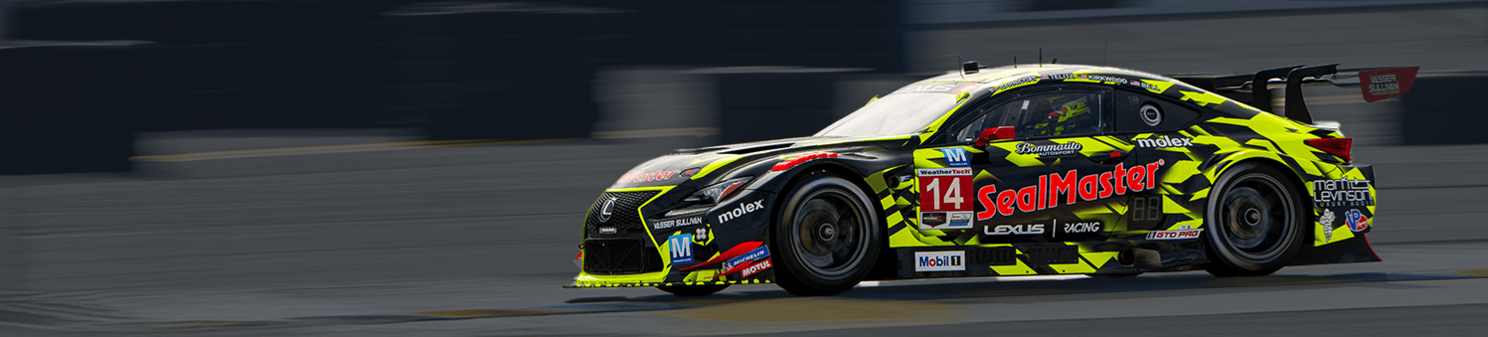
The Lexus RC F GT3 car is fitted with a full length underbody, which means that all ‘wetted surfaces’ of the car have an aerodynamic effect on the cars performance [‘wetted surfaces’ are those body surfaces that come into contact with airflow and then exert an aerodynamic influence on the car]. The ride height is influential in controlling the underbody ‘wetted surfaces’ – and this is where the aerodynamic effect occurs. The rear wing, fitted to the car is adjustable and by setting at a high angle of incidence, it generates more downforce at the rear of the car.
Sometimes the driver will comment that he has too much grip at the rear of the car and needs more grip at the front to make the car more responsive in the corners. Because there is no front wing to adjust on a GT3 car, the engineers will make adjustments to the ride heights of the car to give the driver the balance they are looking for.
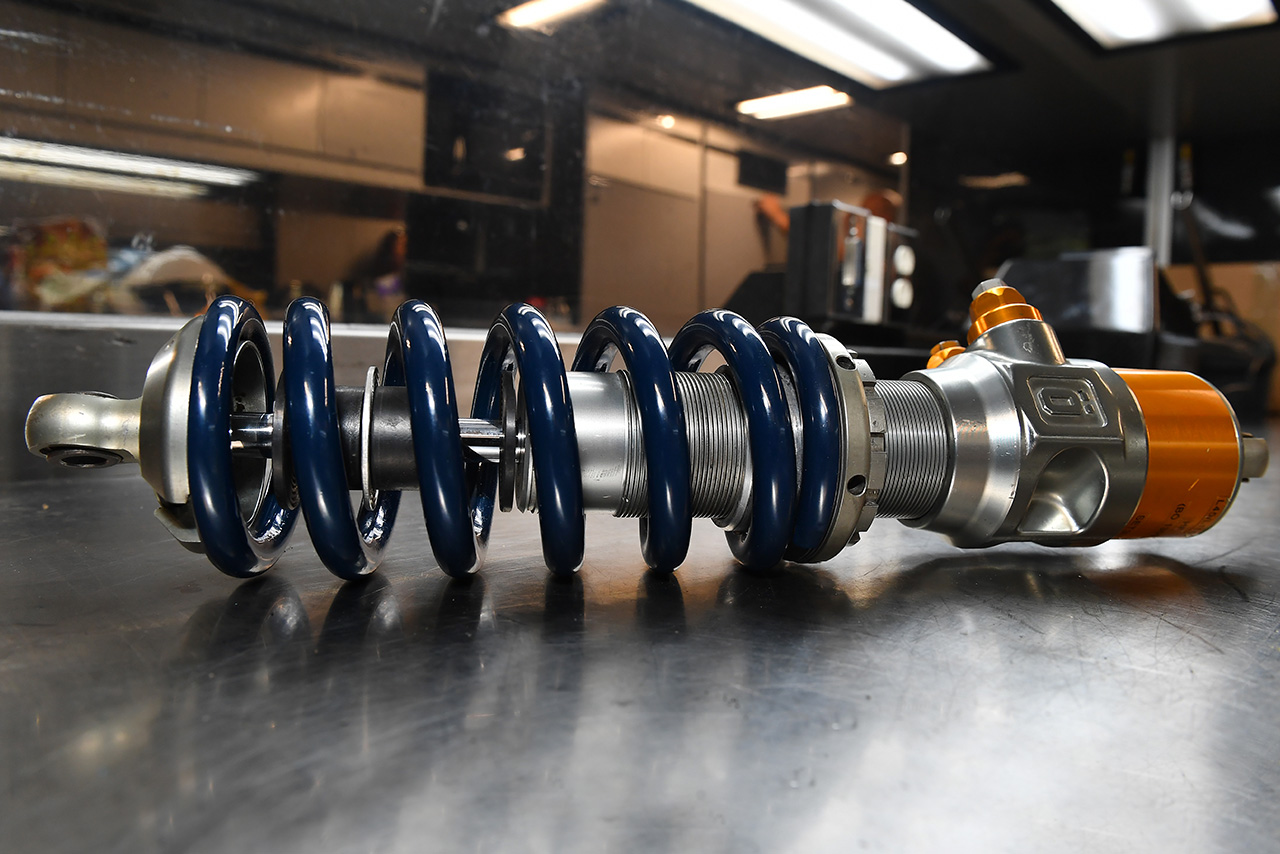
In next month’s tech talk, the third of this three-part series on set-up of the Lexus RC F GT3, we will examine the final three factors, including the dampers, corner weights and anti-roll bars and how they affect the set-up of a race car.
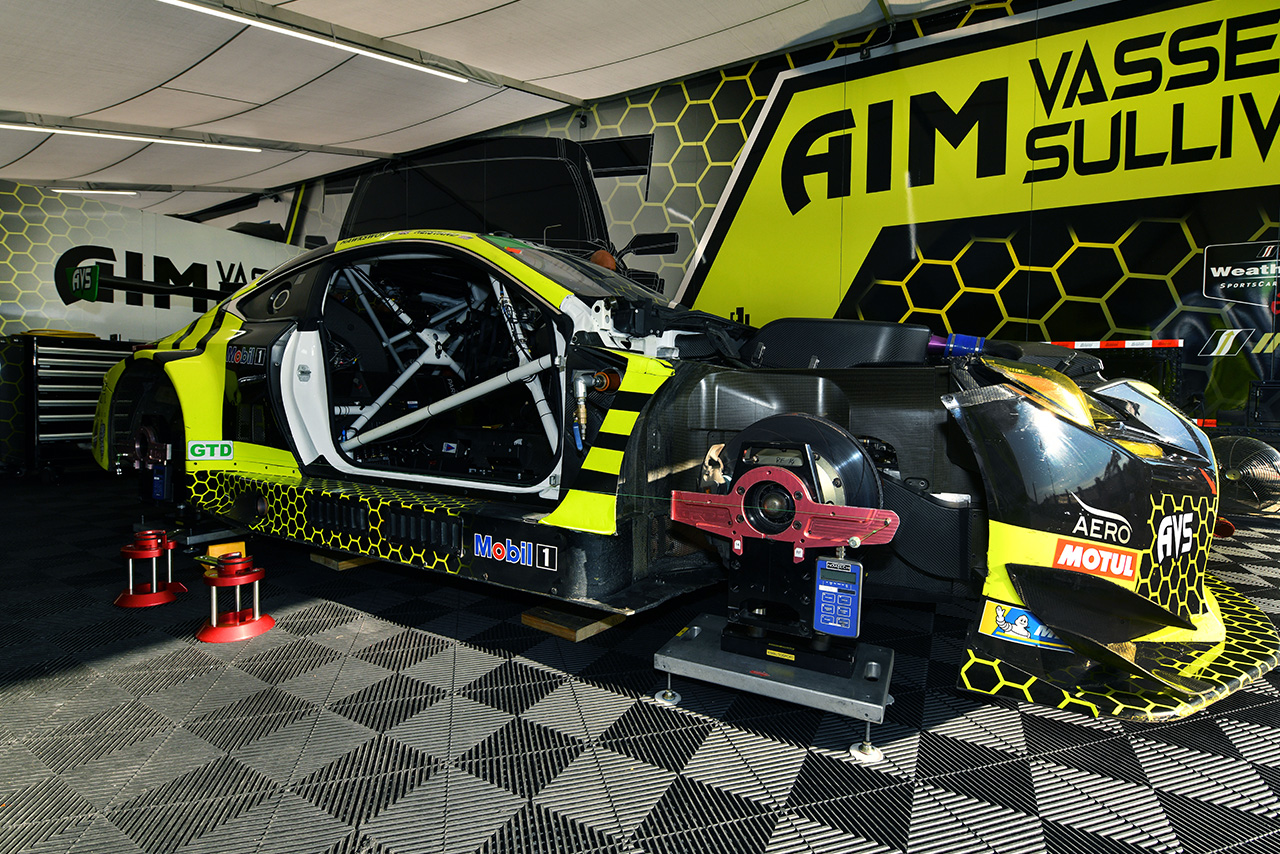
When an engineer asks the race mechanics to ‘check the corner weights,’ the car is positioned on the ‘flat patch.’ The flat patch is four purpose designed platforms that sit under each of the race car’s four wheels and are set with a laser level when the AIM VASSER SULLIVAN race team arrives at the track before the event. These platforms are carefully leveled and marked such that when the car is mounted on them, the car replicates the ‘flat patch’ back at the team’s race shop, where the car was originally prepared. Once the car is ready for the ‘flat patch’ it is fitted with specially designed wheels that have load cells mounted into the structure. In fact, the set-up wheels are not wheels at all, they replace the wheel and allow the mechanics to set the springs, toes and cambers to an extraordinary degree of accuracy. To set the corner weights, the mechanics are looking to adjust the fitting of the springs to achieve equal loads across the front axle of the car. Failure to do this often causes strange behavior when the driver is braking hard on the track. Experienced drivers often recognize when the ‘corner weights’ are not set correctly and will then ask for them to be checked.
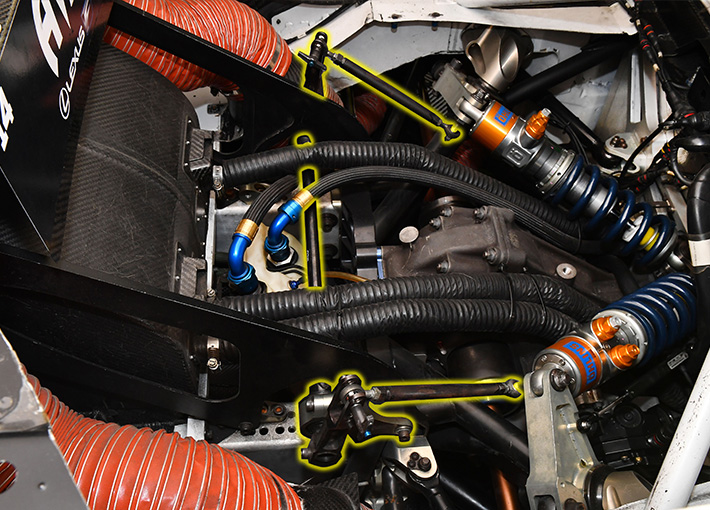
The final step in the whole set-up process is to set and connect the ‘anti-roll’ bars. The front anti-roll bar is a laterally mounted torsion bar that connects the right-hand front suspension to the left-hand front suspension. Its job is to resist the rolling of the car which takes place when the driver takes the car into a corner. By adjusting the settings of the front and rear ‘anti-roll’ bars it is possible for the engineer to quickly tune the balance of the car to the driver’s liking. The anti-roll bars are the last item to be connected during the process of setting up a race car and they are arguably one of the most powerful tools the driver and engineer can adjust to help the performance of the race car.
It is clear that the ‘set-up’ of a race car is a case of juggling a number of components, all of which are interdependent, and then having the driver run the car on the track to give his opinion. Most racing teams now, are able to run simulations to ascertain whether a given ‘set-up’ might be appropriate for the circuit that the car is being prepared to race at. These simulations provide the engineer with opportunities to ‘test the car in a virtual environment’ before going to the track. Thus, they are able to try many combinations of toe, camber, ride height, spring stiffness, anti-roll bar setting and rear wing level in an attempt to optimize the car to a given race track before the driver even arrives.