






MAY 2020 ISSUE
Watching old films of motor racing from the 1950s it is possible to see race cars being refueled in pit lane during a race using a funnel and an open fuel churn. Often the fuel tank was located right behind the driver and in the haste and drama of a pit stop, spillage was an inevitable risk. In the unfortunate event of the spilt fuel contacting the hot exhaust system or hot brakes then the low flashpoint of the racing fuel could cause the fuel to ignite.
Over time, race teams have learned to improve their procedures and they also discovered equipment in the aircraft industry that allowed them to fuel their race cars from sealed containers using dry-break connectors.
Soon these dry-break connectors were being purpose designed for race cars and the improvement in safety along with the prevention of fire has been tremendous.
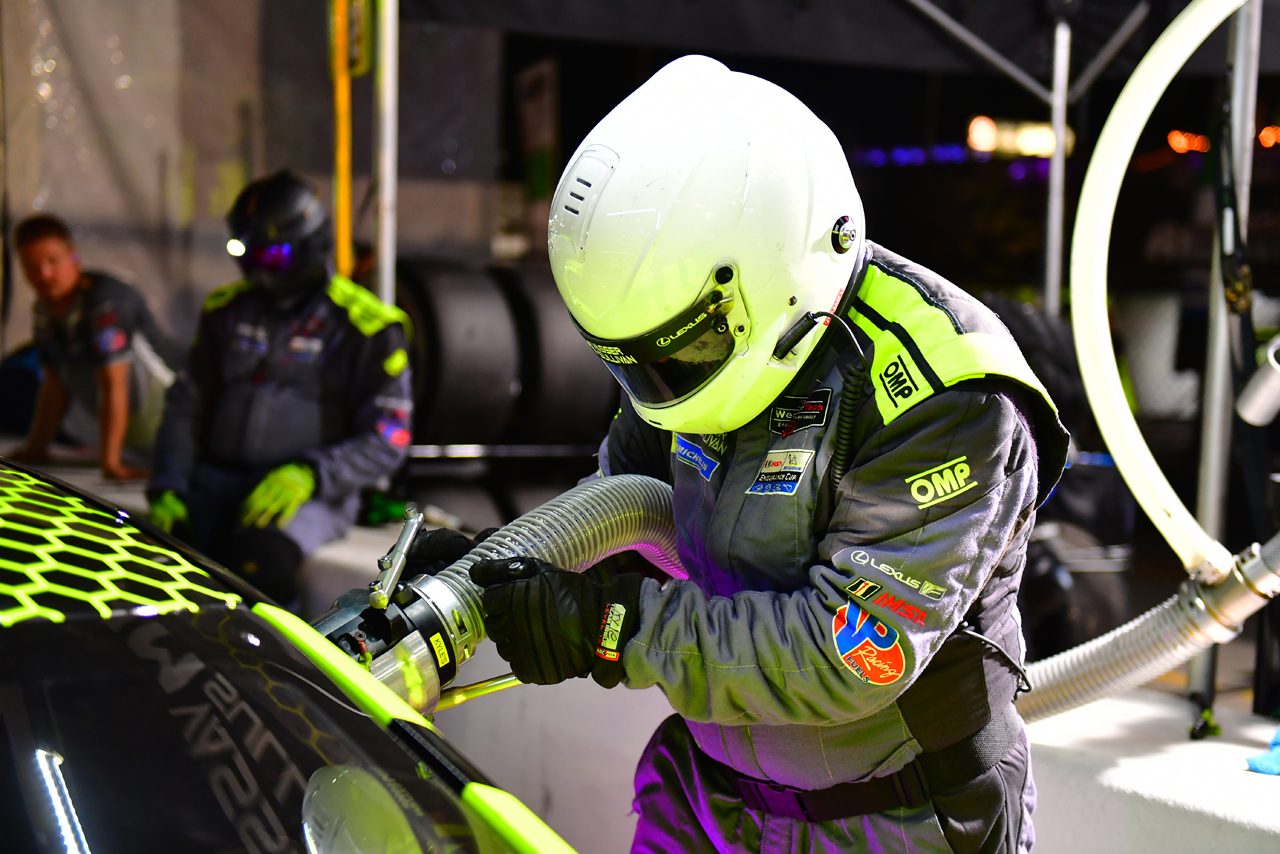
The Lexus RC F GT3 car uses a dry break connector for both refueling during practice sessions and also during the race. The dry break connector latches on to the fuel tank filler and both filling and venting take place via concentric hoses when the refueler opens the valve using the two levers shown above.
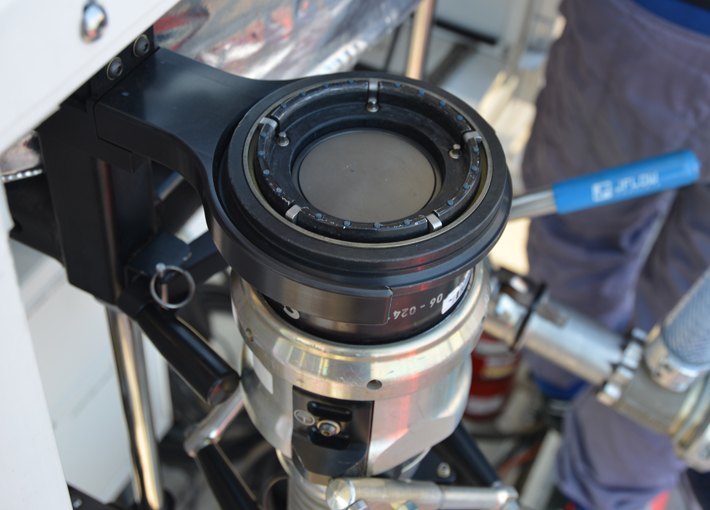
It is not possible to open the fuel valve unless the connector is correctly mated to the fuel tank filler. This is achieved using a series of interlocks to ensure fuel will only flow when the two mating parts are correctly aligned.
The refueling nozzle itself weighs in at 12 lbs. and the refueler has to manage that along with the weight of fuel in the hose. The fill rate into the Lexus RC F GT3 is just over 2 liters/second.
When fueling is complete, the refueler closes the valve and he is then able to remove the refueling nozzle from the fuel tank connector without any spillage, and the car is now ready to rejoin the race with a full tank of fuel.